Monday, 20 May 2013

The Urinary System

Upon hearing from my teacher that tea and coffee are diuretics, meaning stimulates peeing, I was curious as to why that was. So I don't have a terribly specific question, rather, what can I learn about this?
The first interesting thing I discovered is that there are many websites and blogs dedicated to tea alone. But among these, I gathered many interesting facts on tea as a possible diuretic. 
Tea leaves that contain caffeine have diuretic properties, however, in order to experience diuretic effects one would have to drink enough cups of tea to take in 300 mg of caffeine which would be roughly 6 cups of regular caffeinated tea, according to these sites. 

http://theteamaestro.blogspot.ca/2012/03/does-drinking-tea-produce-diuretic.html

http://www.yourteahq.com/diuretic-tea/
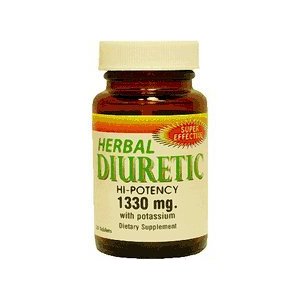

While there are clear negative effects of ingesting too many foods with diuretic properties (such as dehydration), diuretics may be helpful in lowering high blood pressure and promoting the urinary system to excrete toxins in the blood. 
In fact, diuretic pills are used to help people with illnesses such as edema.

http://www.yourteahq.com/diureticgreentea/


While tea may have many health benefits, the caffeine in the leaves can have diuretic effects, so when it comes to tea, there does exist the idea of having too much of a good thing. 

Sunday, 19 May 2013

Friday, 3 May 2013

Playland!

After completing the respiratory and cardiovascular systems unit, we went on a field trip to Playland to further study these systems on a more personal level (as if dissecting a heart was not personal enough). Like the good little lab rats we are, we've discovered many different physical reactions that occur in an amusement park and take place in the respiratory and cardiovascular systems... and even in the digestive system. 
For example, while waiting in line for Playland's famous wooden roller coaster, our hearts were steady, though slightly faster from the excitement (and the speed walk across the park). This was much a different story when we finally planted our butts into the seats and the single metal bar that was to be the only thing preventing us from falling out, lowered and sealed our fate. And while we may have thought our pulse could not be faster than it was at the top of the first hill, we were proven wrong many, many times. By the end of the ride, with watery eyes, racing hearts, sweaty palms and brilliant smiles we had survived the physical turmoil of the wooden roller coaster. 
Little did we know, that there was much more to come.
As part of the 'fight or flight' tactic built into humans, when we approached and ended the roller coaster, our heart rate increased due to fear or stress. Something that no reasoning in our minds of only the most professional engineers having been chosen to construct the roller coaster could override. 
As a result, our hearts began to pump more blood and our nerves began to prepare for a swift response. 
Some other reactions included- but were not limited to- sweaty palms at the sight of the Hellovater, dizzy feelings from the Atmosphere, and that wonderful queasy 
Oh, and there was and unfortunate case of vomiting brought on by the amusement park food (but I won't name names).
As far as breathing rate goes, I felt I remained fairly consistent. 
I Spy, with my little eye, Ms. Phillips photo bombing...

Wednesday, 24 April 2013

Heart attack

What is a heart attack, how is it caused, and how can it be treated or prevented?
This site,
http://bodyandhealth.canada.com/channel_condition_info_details.asp?channel_id=1055&disease_id=163&relation_id=17519
Offers a very detailed explanation of what exactly a heart attack is.
When the myocardium, which is the muscle that pumps the heart does not receive oxygen because a blot clot in an artery is preventing the flow of blood.
Symptoms include fatigue, shortness of breath as well as chest pain. These are signs that may lead up to a heart attack.
Irregular heart beats are also very common and may lead to death, such as when the left ventricle does not properly pump blood to the body.
Fun fact; less severe heart attacks can often be mistaken for heart burn.
This website,
http://www.nhlbi.nih.gov/health/health-topics/topics/heartattack/causes.html
Explains causes such as drug use, stress, smoking and of course poor diet that can lead to heart attacks.


And this site also shows an interesting video showing the two main causes.


While I understood that clogged arteries is often a cause of heart attacks, I was interested to discover that it is the coronary arteries (the arteries on the surface of the heart supplying blood to the muscle itself) that may cause this disruption of the heart's rhythm.

Tuesday, 23 April 2013

Circulation

http://m.youtube.com/watch?v=QTDf8PKyalU

Here is the link to our video explaining how blood flows through a four chambered heart. Created by myself and Evelyn G.

Tuesday, 9 April 2013

Collapsed Lung

Collapsed Lung
Today, we delve into the mucus-covered world of lungs. I've searched far and wide, to the furthest reaches of the internet to answer lingering questions surrounding the topic of a COLLAPSED LUNG.
What, pray tell, is a collapsed lung?
In accordance with this site, a collapsed lung is a collection of air in the space around your lungs which prevents the lung from expanding to the size of a normal breath, which, by the way is 500 ml. of air.

http://www.nlm.nih.gov/medlineplus/ency/article/000087.htm

You may be wondering how can such a thing occur. Well, should the lung become punctured in some way, air would escape from it into the thoracic cavity, which is bad. Even worse, a spontaneous pneumothorax can occur, which is when lung collapse occurs out of the blue, without any evident cause.
Some people who are more prone to lung collapse are those with asthma, smokers, and very thin people.
Tell-Tale signs of this ailment range from sharp chest pains and shortness of breath to more extreme symptoms as changing of skin colour caused by lack of oxygen and rapid heart rate.
You can, however be tested and treated for these symptoms.


http://drugline.org/img/ail/102_103_3.jpg

http://benich.com/files/LAM.jpg

This Youtube video does a great job of explaining causes and symptoms of a collapsed lung.

http://www.youtube.com/watch?v=i-sZzZ4TMnY

Saturday, 6 April 2013

Spirometer and Lung Capacity

After measuring our vital capacity through the use of a spirometer, our class got a variety of readings ranging from 2-5, or 2000-5000. My vital capacity reading was 3700 which represents 3.7 gallons of air that my lungs are capable of holding.
 I think the lung capacity of each person is often a good reflection of their physical health. People who exercise regularly will have a better lung capacity, especially if their sport of choice is swimming. Someone with a history of swimming and exercising their lung capacity would likely have a greater reading on the spirometer. There are other ways to expand your lung capacity such as through concentrated breathing exercises, which is all but synonymous to playing a wind instrument. I think that my years of playing clarinet were beneficial to me in this exercise. Another sizable factor is just that - size. The taller the person, the larger their lungs thus allowing more air capacity.
Avg. spirometer readings:
Girl at age 17: 2750
Boy at age 17: 4100
The average person's regular breath is 500 mls. However, we breathe deeper while exercising or experiencing increased heart rate. The opposite is true for times when our heart rate is slower, such as while sleeping.
Breathing out forcefully is different from regular exhalation because when we exhale naturally, that is our diaphragm relaxing and contracting. When exhaling forcefully muscles such as the abdomen contract creating pressure in the thoracic cavity which pushes air out.